We all use different social media platforms for different reasons. That is why we should also post differently on each platform. I drafted a few social media posts advertising my upcoming article that discusses Taylor Swift’s impact on the NFL. Let’s dive into what choices I made for each platform and why.
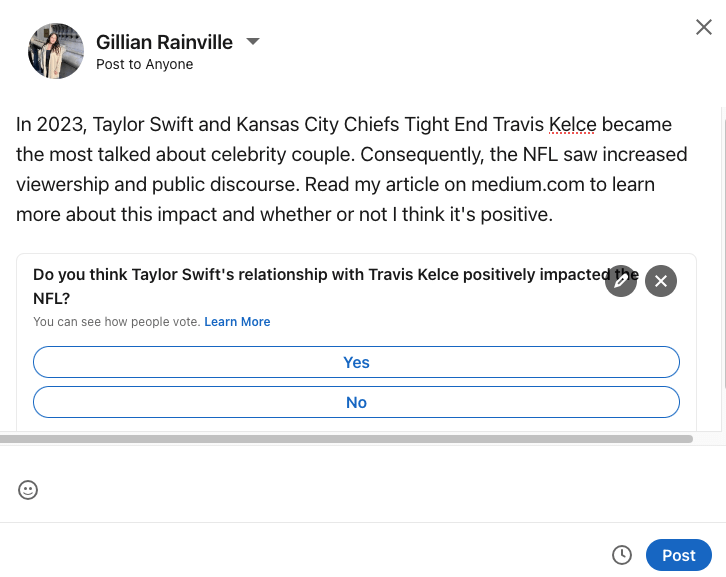
On LinkedIn, I decided to utilize the poll instead of the standard image as my visual for this post. In the article “What to Post on LinkedIn in 2023: 5 Types of Content You Should Create”, it is said that posts with polls reach 2.1 to 2.9x more users. The tips for creating a poll included keeping it to a week in duration and with two answers. I thought this option made sense because my topic is something that I’ve heard a lot of division on and it allows users to share their opinion. In my caption, I kept my opinion vague on purpose. Doing so will cause people on both sides to be interested in clicking on my article. Then, those who disagree with me have a chance to be persuaded. Those who do agree with me will enjoy an article that might teach them more facts about the topic that they didn’t know.
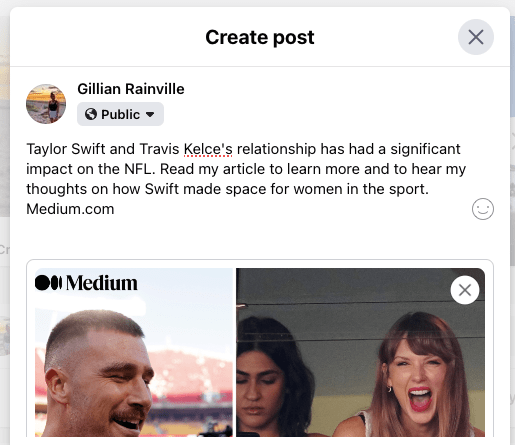
Meta’s “Best practices for Page posts on Facebook” article explains that you should understand your audience, use call-to-actions, and include high-quality and simple visuals on the platform. When choosing between Facebook and Instagram, I went with Facebook based on my audience. This is because my topic is one that I found to be the most controversial among older demographics. Facebook is the most popular platform with this group, therefore it made the most sense to advertise my article here. My call-to-action in this case is the link to my article. I went with a simple and appealing graphic and only included the necessary text on the image to avoid too much distraction.
X (Formerly Twitter)
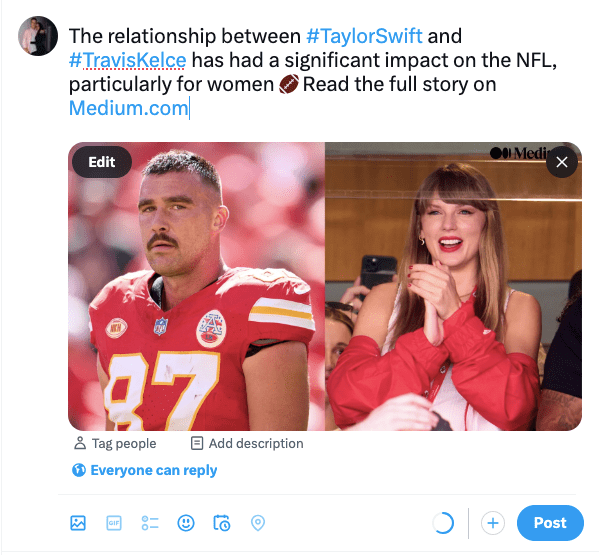
The “Organic best practices” post from X Business explains the best strategies for posting on the X app, formerly known as Twitter. I used a visual to allow the post to stand out on a platform that is largely text. Within the visual, I kept the text minimal by only showing the website logo that I am driving traffic to. X Business advises that you keep your message concise with a conversational tone. I also followed X Business’s advice to include only 1-2 hashtags, a call-to-action, and emojis if applicable.
Conclusion
The examples I have included here all have a lot in common. However, what is different about them is the most important. Social media may seem like one single entity, but when you pay attention to what makes each platform unique, you can use it to your advantage.


Leave a comment