
A competitive analysis is a crucial first step when evaluating what steps a brand should take to improve its content. In a HubSpot article about competitive analysis, Christine White explains that a competitive analysis report helps one to “understand the brand’s position in the market, map competitors’ strengths/weaknesses, and discover growth opportunities.” White defines competitive analysis as “the process of comparing your competitors against your brand to understand their core differentiators, strengths, and weaknesses. It’s an in-depth breakdown of each competitor’s market position, sales & marketing tactics, growth strategy, and other business-critical aspects to see what they’re doing right and find opportunities for your business.” I recently completed a content analysis report for the nonprofit organization, Women Against Abuse. Now, I’m taking a look at their competitors.
Direct Competitors, Indirect Competitors, and Aspirational Competitors
The first step in a competitive analysis is to identify the competitors. White explains that it’s important to put your competitors into different buckets, so I focused on a direct competitor, an indirect competitor, and an aspirational competitor. White explains that direct competitors are brands that “offer the same product/service as you to the same target audience. People will often compare you to these brands when making a buying decision.” She states that indirect competitors “solve the same problem but with a different solution. They present opportunities for you to expand your offering.” The aspirational competitor is anyone else in the marketplace that’s doing a great job and your brand looks up to them, even if they’re not necessarily direct or indirect competitors. For Women Against Abuse’s competitors, I selected the direct competitor National Network to End Domestic Violence, the indirect competitor Planned Parenthood, and the aspirational competitor Feeding America.
Research
The competitors have been selected and it’s time to begin the research. I analyzed many factors of each brand. This includes looking at the content that’s put out both on the brands’ website and social media profiles. I explored the style of their content, the quality of it, and the visual appeal. I examined how their audience interacts with their content through the likes, shares, and comments on social media posts, as well as the number of followers. I looked into the SEO strategies being used by each competitor, including on-page optimization, backlinks, search rankings, and keyword usage. Compiling all of this research allowed me to gain a strong understanding of the competitors.
SWOT Analysis
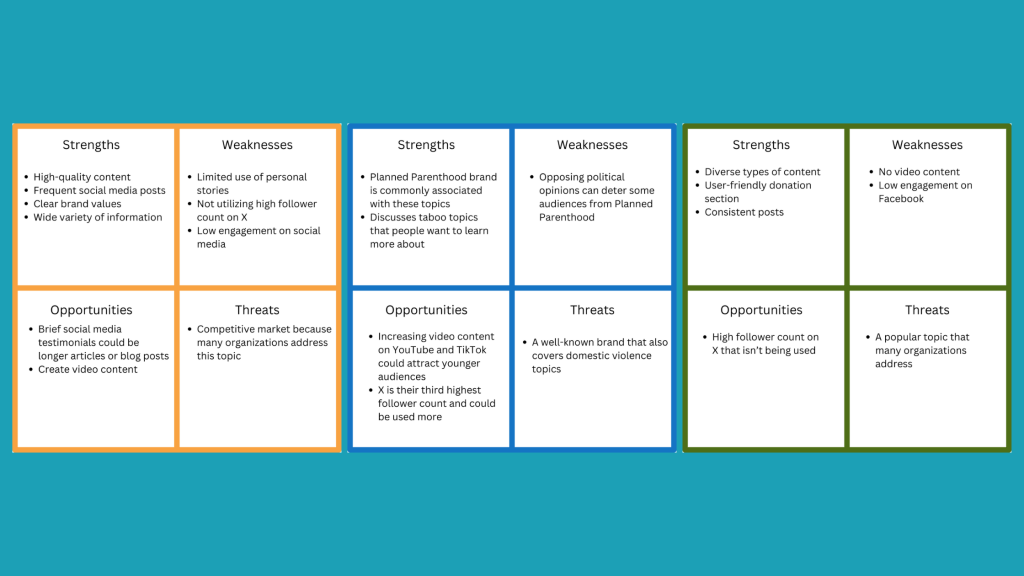
Once I collected all of the necessary data, the final step was to complete a SWOT analysis for each competitor. SWOT stands for strengths, weaknesses, opportunities, and threats. An article from Asana discussing competitive analysis defines a SWOT analysis as a tool that “helps you identify your company’s strengths and weaknesses. It also helps turn weaknesses into opportunities and assess threats you face based on your competition.” Although companies often complete SWOT analyses of themselves, it’s beneficial to do so for your competitors too. This aids you in seeing what your brand can do to improve.
Recommendation Summary
Once I had all of my research and SWOT analyses done, I was able to put it all together in a report. At the end of the report, I analyzed what common weaknesses were found among the competitors. This information allowed me to write a recommendation summary to Women Against Abuse on what they should do to improve their brand and stay on top within their marketplace.

 Gillian Rainville | QU Graduate Blog
Leave a comment