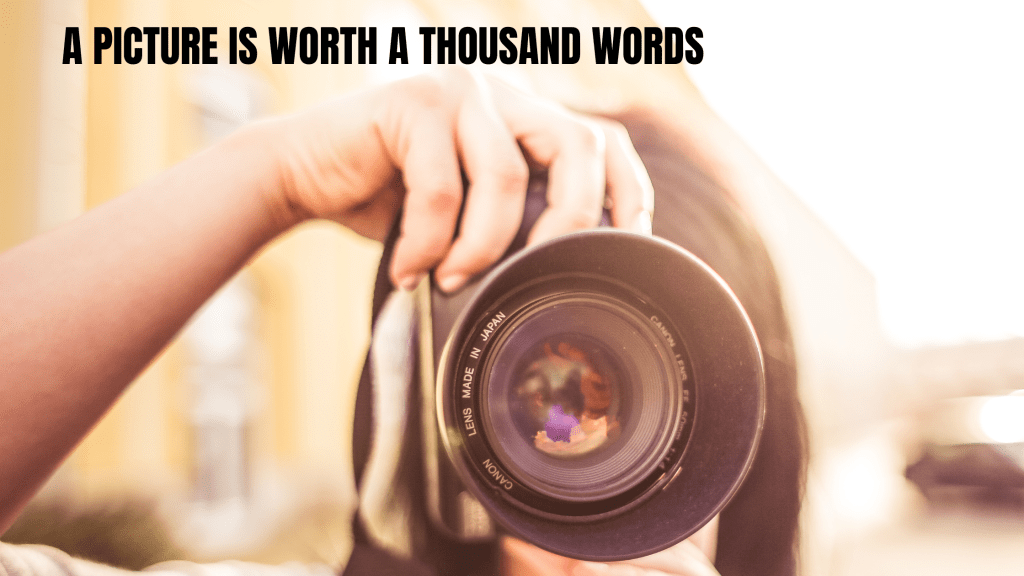
When we think of designs, what is the first thing that comes to mind? Is it type or color? Maybe. But, I think it’s more likely that the first thing you think of are the images. They are a crucial part of design. Images play an important role in conveying the story that a designer wants to tell. As the saying goes, a picture is worth a thousand words.
MOOD BOARDS
I was tasked with creating three photography-based mood boards. I approached it by imagining that a fictional swimwear brand, Island Swimwear, is releasing three different collections for this summer. The three collections all have their own distinct mood, as represented by the different mood boards.
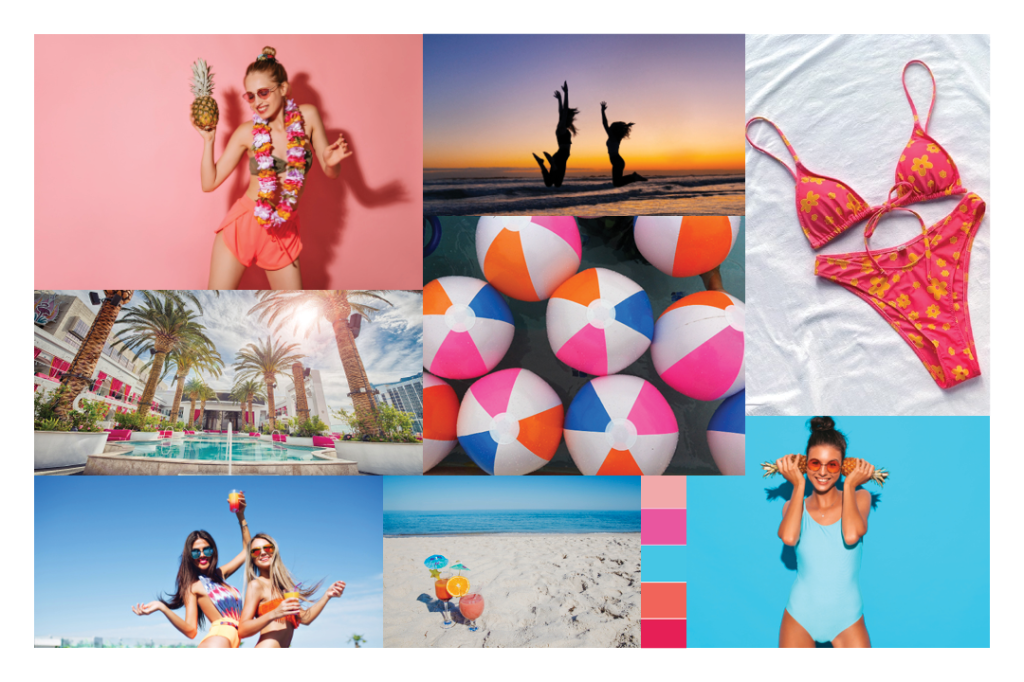
The first mood board is what I call the “beach party aesthetic”. This represents a collection of bathing suits that have vivid colors and fun patterns, one that you might want to wear to a beach party. Within the mood board I focused on bright, happy, and fun imagery. This included photos of drinks, dancing on the beach, and jumping at sunset. The curation of these images, as well as the color palette, all establish what a customer should take away from this collection.
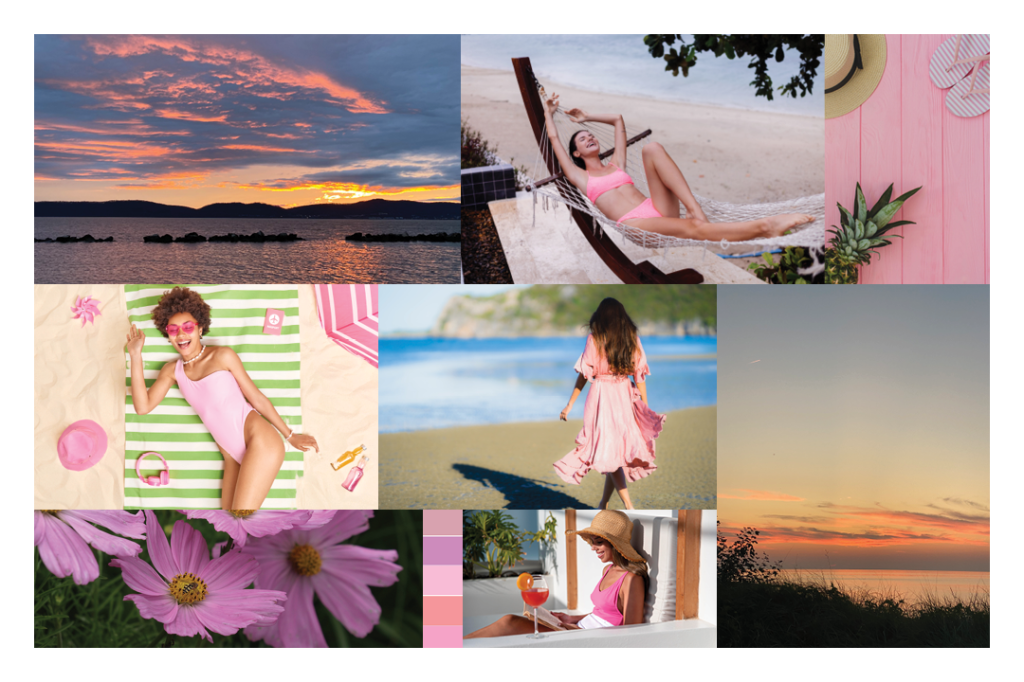
The second mood board represents the “soft girl aesthetic” collection. The term “soft girl” is one that I’ve seen circulating online and is generally associated with delicate and feminine attributes. This collection would include a lot of simple, light pink designs. I imagine this would be for the ones who are having fun while relaxing at the beach, which is my personal favorite. I included some of my favorite photos of sunsets that I’ve taken, as well as images of reading and strolling on the beach. Just like the beach party mood board, a customer who is interested in this collection would understand what it represents by viewing these images.
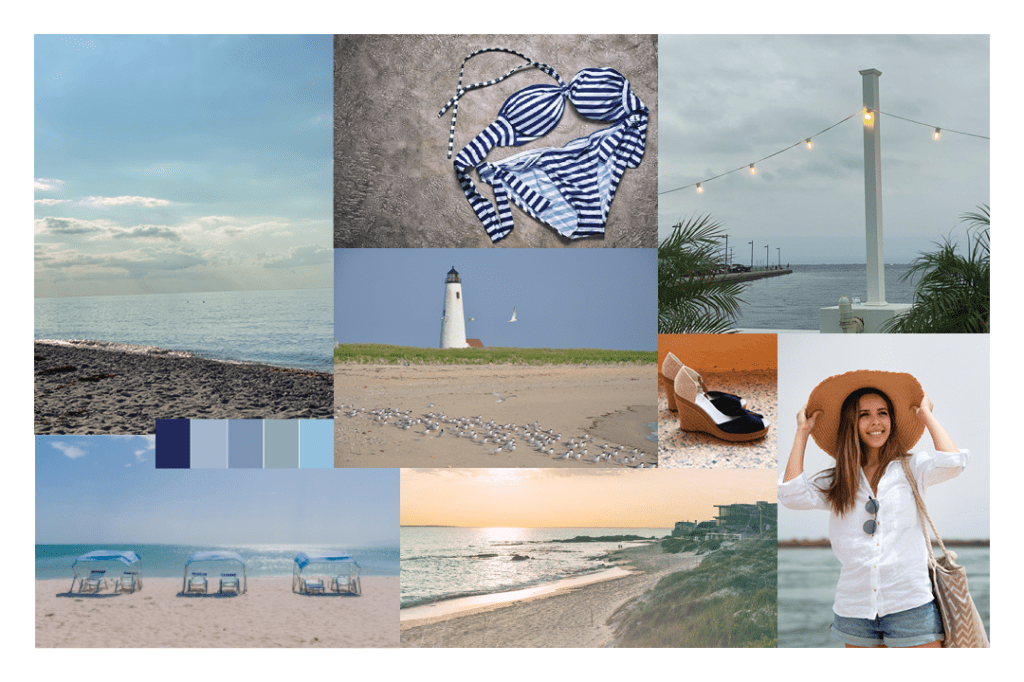
The third mood board is for the “coastal grandmother aesthetic” collection. Similarly to “soft girl”, the term “coastal grandmother” is one that I’ve seen used a lot online. It is meant to represent an effortless and relaxed beach style. This aesthetic has also been heavily associated with white linen, navy blue and white stripes, and various shades of blue. I exhibited this through relaxing images that include a lot of blue, as well as clothing pieces that fit the mood. Once again, a customer could clearly see what pieces to expect from this collection when viewing the mood board.
BROCHURE
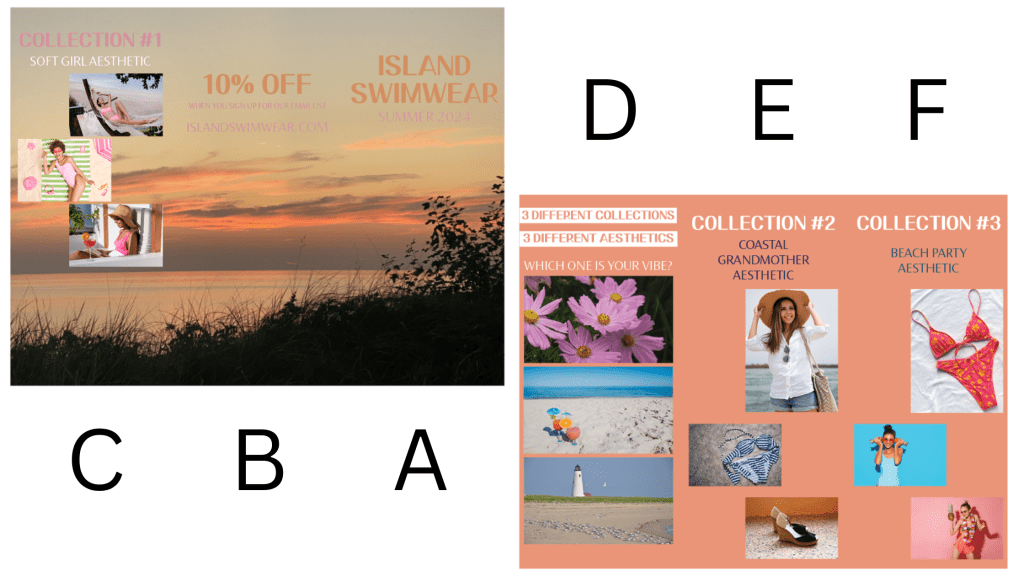
I created a trifold brochure to showcase Island Swimwear’s three different collections for Summer 2024. Using images from the mood boards, I chose the ones that fit and best represented the aesthetics. In Graphic Design For Everyone, Cath Caldwell shows how to plan the layout of a trifold brochure. As shown in the image above, I used my favorite beach sunset photo as the main one and spread it across all three parts of the outside. I felt that this photo best represented the project as a whole. Keeping in mind how we read from left to right, I used section D to show what was to come in the rest of the brochure, since it’s the inside page on the left. Section C shows Collection #1 because it’s the inside page on the right, and the collection fits with the sunset picture as well.
PRODUCT LABELS
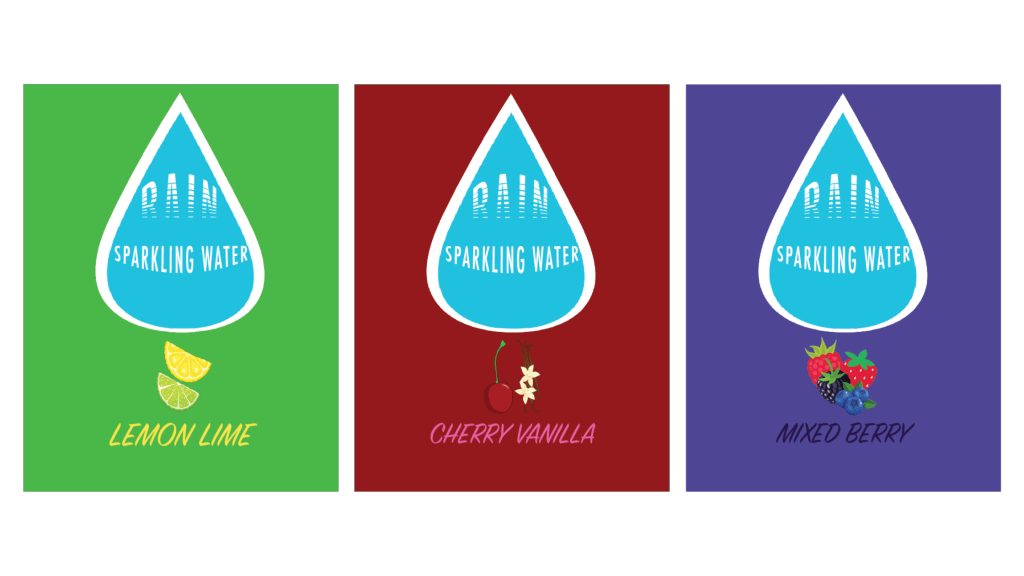
Another example of a picture being worth a thousand words is the label on a product. The label should tell the customer exactly what they’re getting. I put this to the test by creating labels for my fictional brand, Rain Sparkling Water. As seen in the images, I clearly show what to expect from the drink by including illustrations based on the flavor. I enhance this through my choices of color as well. When creating the brand logo, I went with a raindrop because it will be easily recognizable as the brand “Rain”.
CHOOSE THE RIGHT IMAGE
In conclusion, the images used in any project are going to be very important in representing what it’s all about. Images are generally what will catch one’s eye first, so be sure to select them well when creating a design.

 Gillian Rainville | QU Graduate Blog
Leave a comment